

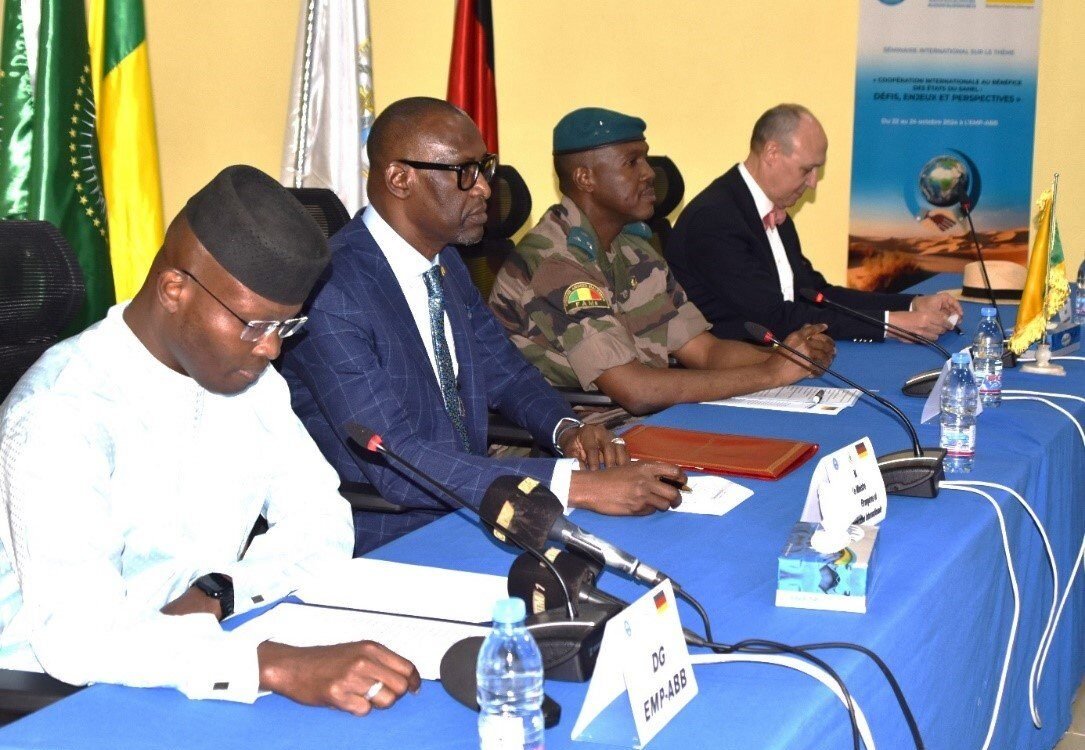
Bamako, Mali – From 22 to 24 October 2024, the prestigious Alioune Blondin Bèye Peacekeeping School (EMP-ABB) hosted an international seminar on the challenges and prospects of cooperation for the benefit of the Sahel States. This major international seminar brought together decision-makers, diplomats, experts, international partners and researchers in the heart of the Malian capital to discuss the pressing challenges, strategic stakes and prospects of international cooperation for the Sahel States. In a context of multifaceted crises, the seminar highlighted the strategies needed to strengthen stability, development and peace in the Sahel region.
The event, funded by the Federal Republic of Germany, brought together national and international experts for intensive discussions on the action needed to strengthen stability and development in this strategic and vulnerable region.
Underlining the importance of the meeting, several senior officials attended, including His Excellency the Minister of State, Minister of Territorial Administration and Government Spokesperson, and His Excellency the Minister of Foreign Affairs and International Cooperation. His Excellency the Ambassador of Germany to Mali also honoured the event with his presence, reflecting his country's commitment to supporting the Sahel in its quest for peace and sustainable development.

A Difficult Context
For more than a decade, the Sahel has faced major security challenges, recurring political instability and growing threats from climate change. Armed groups, intercommunal tensions and food crises have weakened all the Sahel countries, calling for concerted international action to restore peace and lay the foundations for sustainable development.
Against this backdrop, the seminar's discussions were intensive and wide-ranging. They covered issues from collective security to climate resilience and economic development opportunities. International cooperation was at the heart of the debates, underlining the need for coordinated approaches to tackle the root causes of regional instability.

The Challenges of International Cooperation in the Sahel
The challenges of international cooperation in the Sahel are many. The first lies in the region's geopolitical complexity. With its vast territories and porous borders, the Sahel is difficult terrain for international interventions. Rising tensions between local actors, worsened by economic hardship, complicate any multilateral cooperation strategy.
Participants also stressed the challenges of coordinating efforts. Too often, international interventions lack cohesion, fragmenting the impact of development and peacekeeping initiatives. Inclusive and transparent governance was cited as a prerequisite for effective cooperation.

Strategic Stakes: Security, Development and Climate Resilience
Security was central to the discussions. Faced with increased violence by armed groups, cooperation on defence and intelligence is essential to keep populations safe. Models of military collaboration were discussed.
On development, the seminar stressed the urgency of boosting local economies to offer people viable alternatives to forced migration or joining armed groups. Job creation, economic diversification and better infrastructure are key to lasting stability in the region.
Climate change is also a crucial challenge for the Sahel States. Desertification and dwindling drinking water resources worsen conflicts and reduce livelihoods, requiring integrated and sustainable solutions. The role of international cooperation in funding environmental programmes was highlighted as a priority for strengthening the resilience of local populations.

Prospects: Towards Reinvented International Cooperation
At the end of the meeting, prospects were identified for revitalising international cooperation in the Sahel, including the importance of an equal partnership between the Sahel States and international partners. The aim is to develop “close-to-the-ground” cooperation, based on trust and taking local specificities into account.
Setting up regional platforms for information exchange, capacity building and monitoring of international commitments was also recommended. Such structures could improve the coordination of initiatives and maximise their impact.
Finally, participants called for greater commitment to education and vocational training for young people, as the future of the Sahel will depend on the ability of younger generations to build a more stable and prosperous future. International cooperation should therefore play a decisive role by supporting education programmes adapted to the realities of the Sahel.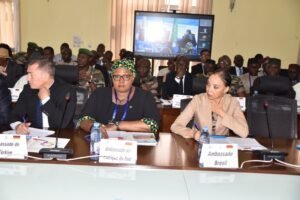
Conclusion
The international seminar on cooperation for the benefit of the Sahel States laid the foundations for constructive dialogue and opened new prospects for coordinated action. Participants leave with a clear, if ambitious, roadmap for strengthening partnerships and launching concrete initiatives that respond to the region's challenges. In an increasingly interdependent world, international solidarity and concerted strategies are key to building a peaceful and resilient Sahel.